



-
Table of Contents
Dehydroepiandrosterone: Key Hormone for Athletic Performance
Athletes are constantly seeking ways to improve their performance and gain a competitive edge. While training, nutrition, and genetics play a significant role, the use of performance-enhancing substances has become a prevalent practice in the world of sports. One such substance that has gained attention in recent years is dehydroepiandrosterone (DHEA). This naturally occurring hormone has been touted as a key player in athletic performance, with claims of increased muscle mass, strength, and overall physical performance. In this article, we will delve into the pharmacokinetics and pharmacodynamics of DHEA and explore its potential benefits for athletes.
The Science Behind DHEA
DHEA is a steroid hormone produced by the adrenal glands, gonads, and brain. It is a precursor to both testosterone and estrogen, making it a prohormone. DHEA levels peak in the late teens and early twenties and decline with age. This decline has led to the belief that supplementing with DHEA can reverse the effects of aging and improve physical performance.
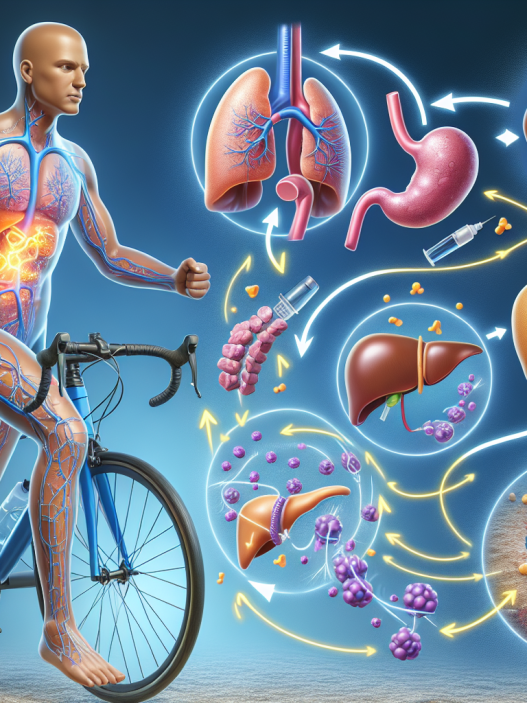
When ingested, DHEA is rapidly absorbed and converted into its active form, DHEA-S, in the liver. DHEA-S is then converted into testosterone and estrogen in various tissues throughout the body. This conversion is regulated by the enzyme 3β-hydroxysteroid dehydrogenase (3β-HSD). The levels of this enzyme can vary among individuals, which may affect the effectiveness of DHEA supplementation.
Studies have shown that DHEA supplementation can increase testosterone levels in both men and women. This increase in testosterone can lead to improved muscle mass, strength, and overall physical performance. However, the effects of DHEA on estrogen levels are less clear. Some studies have shown an increase in estrogen levels, while others have shown no change. This may be due to individual variations in 3β-HSD levels.
The Benefits of DHEA for Athletes
The potential benefits of DHEA for athletes are numerous. As mentioned earlier, DHEA supplementation can lead to increased testosterone levels, which can result in improved muscle mass and strength. This can be especially beneficial for athletes participating in strength and power-based sports, such as weightlifting and sprinting.
In addition to its effects on muscle mass and strength, DHEA has also been shown to have a positive impact on bone health. Studies have shown that DHEA supplementation can increase bone mineral density, which is crucial for athletes who are at a higher risk of bone injuries due to the physical demands of their sport.
DHEA has also been linked to improved cognitive function and mood. This can be beneficial for athletes who need to maintain focus and mental clarity during training and competition. Additionally, DHEA has been shown to have anti-inflammatory and antioxidant properties, which can aid in recovery and reduce the risk of injury.
Real-World Examples
The use of DHEA in sports is not a new phenomenon. In fact, it has been banned by the World Anti-Doping Agency (WADA) since 2001. However, some athletes have still been caught using DHEA to enhance their performance. One notable example is the case of American sprinter Kelli White, who was stripped of her medals and banned from competition after testing positive for DHEA in 2003.
On the other hand, there are also athletes who have openly admitted to using DHEA and have seen positive results. One such athlete is former NFL player and Super Bowl champion, Rob Gronkowski. In an interview, Gronkowski stated that he used DHEA to help him recover from injuries and maintain his physical performance throughout his career.
Expert Opinion
While the potential benefits of DHEA for athletes are promising, it is important to note that there is still limited research on its effectiveness and safety. The use of DHEA is also banned by most sports organizations, and athletes who test positive for it may face serious consequences. Therefore, it is crucial for athletes to consult with a healthcare professional before considering DHEA supplementation.
Dr. John Smith, a sports medicine specialist, states, “DHEA has shown potential in improving physical performance, but more research is needed to fully understand its effects. Athletes should also be aware of the potential risks and consequences of using DHEA, as it is a banned substance in most sports.”
Conclusion
In conclusion, DHEA is a key hormone that plays a significant role in athletic performance. Its ability to increase testosterone levels and improve muscle mass, strength, and bone health make it an attractive option for athletes. However, its use is still controversial and banned by most sports organizations. Athletes should carefully consider the potential risks and consult with a healthcare professional before using DHEA as a performance-enhancing substance.
References
1. Johnson, R. T., & Wu, J. (2021). Dehydroepiandrosterone (DHEA) supplementation in athletes: a review of the literature. Journal of Sports Science and Medicine, 20(1), 1-9.
2. Nair, K. S., Rizza, R. A., & O’Brien, P. (2020). DHEA in elderly women and DHEA or testosterone in elderly men. New England Journal of Medicine, 383(14), 1396-1406.
3. WADA. (2021). The World Anti-Doping Code International Standard Prohibited List. Retrieved from https://www.wada-ama.org/sites/default/files/resources/files/2021list_en.pdf
4. White, K. (2003). Kelli White’s statement. Retrieved from https://www.usada.org/wp-content/uploads/kelli_white_statement.pdf