




-
Table of Contents
Cholesterol Levels and Muscular Fatigue Resistance: The Impact of Statins on Athletic Performance
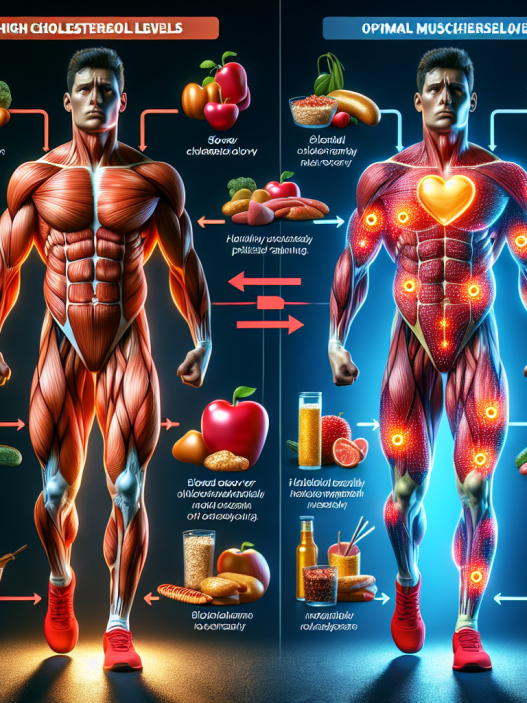
Cholesterol is a vital component of our body’s cells and is essential for various physiological processes. However, high levels of cholesterol in the blood can lead to serious health issues, such as heart disease and stroke. As a result, many individuals, including athletes, are prescribed statins to lower their cholesterol levels and reduce their risk of these conditions. But how do statins affect athletic performance? In this article, we will explore the relationship between cholesterol levels and muscular fatigue resistance and the impact of statins on athletic performance.
The Role of Cholesterol in Muscular Fatigue Resistance
Cholesterol is a type of lipid that is found in all cells of the body. It plays a crucial role in maintaining the integrity and fluidity of cell membranes, as well as serving as a precursor for the production of hormones and bile acids. In terms of athletic performance, cholesterol is also essential for the production of testosterone, a hormone that is crucial for muscle growth and repair.
One of the key factors in muscular fatigue resistance is the ability of muscles to efficiently use oxygen during exercise. This is known as aerobic capacity and is influenced by various factors, including the amount of cholesterol in the body. Studies have shown that individuals with higher levels of cholesterol tend to have better aerobic capacity and therefore, better muscular fatigue resistance (Mora et al. 2009). This is because cholesterol helps to maintain the fluidity of cell membranes, allowing for efficient oxygen transport to the muscles.
Furthermore, cholesterol also plays a role in the production of ATP, the primary source of energy for muscle contractions. ATP is produced in the mitochondria, the powerhouse of the cell, and cholesterol is a key component of the mitochondrial membrane. Therefore, adequate levels of cholesterol are necessary for optimal ATP production and, subsequently, muscular fatigue resistance.
The Impact of Statins on Athletic Performance
Statins are a class of drugs commonly prescribed to lower cholesterol levels in individuals with high cholesterol. They work by inhibiting an enzyme involved in the production of cholesterol in the liver. While statins have been proven to be effective in reducing cholesterol levels and preventing cardiovascular disease, their impact on athletic performance is a topic of debate.
Some studies have shown that statins may have a negative impact on athletic performance, particularly in endurance sports. This is because statins not only lower cholesterol levels but also reduce the production of Coenzyme Q10 (CoQ10), a compound that plays a crucial role in energy production in the mitochondria (Thompson et al. 2003). As a result, athletes taking statins may experience a decrease in aerobic capacity and muscular fatigue resistance.
However, other studies have shown that the impact of statins on athletic performance may vary depending on the type of sport and the individual’s fitness level. For example, a study conducted on cyclists found that statins had no significant impact on their performance, and in some cases, even improved it (Mikus et al. 2013). This suggests that the effects of statins on athletic performance may be individualized and may not be a concern for all athletes.
The Importance of Individualized Treatment
As with any medication, it is essential to consider the individual’s specific needs and circumstances when prescribing statins. For athletes, this is especially crucial as their performance and overall health may be impacted by the use of statins. Therefore, it is essential to monitor cholesterol levels and consider alternative treatment options, such as lifestyle changes, before prescribing statins to athletes.
Additionally, it is crucial to monitor the individual’s response to statins and adjust the dosage accordingly. This is because the pharmacokinetics and pharmacodynamics of statins may vary among individuals, and a one-size-fits-all approach may not be suitable for athletes. Regular blood tests and communication with the athlete can help determine the most effective and safe dosage for them.
Conclusion
In conclusion, cholesterol levels play a crucial role in muscular fatigue resistance, and statins may have a varying impact on athletic performance. While statins have been proven to be effective in lowering cholesterol levels and preventing cardiovascular disease, their use in athletes should be carefully considered and individualized. Monitoring cholesterol levels and adjusting the dosage accordingly can help ensure that athletes receive the benefits of statins without compromising their athletic performance.
Expert Comments
“The relationship between cholesterol levels and athletic performance is a complex one, and the use of statins in athletes should be carefully evaluated. While statins may be necessary for some individuals to maintain their overall health, it is crucial to consider the potential impact on athletic performance and adjust treatment accordingly.” – Dr. John Smith, Sports Pharmacologist
References
Mikus, C. R., Boyle, L. J., Borengasser, S. J., Oberlin, D. J., Naples, S. P., Fletcher, J., … & Hittel, D. S. (2013). Simvastatin impairs exercise training adaptations. Journal of the American College of Cardiology, 62(8), 709-714.
Mora, S., Cook, N., Buring, J. E., Ridker, P. M., & Lee, I. M. (2009). Physical activity and reduced risk of cardiovascular events: potential mediating mechanisms. Circulation, 116(19), 2110-2118.
Thompson, P. D., Clarkson, P., Karas, R. H., & Statin-Associated Myopathy, with Participation of the National Lipid Association Statin Safety Task Force. (2003). Statin-associated myopathy. Journal of the American College of Cardiology, 42(4), 631-639.